When you start building an online presence for a small business, it is easy to treat your website address as just another technical box to tick. Many business owners assume that whoever builds their site or hosts their pages will simply handle the domain name on their behalf—and rarely think about who actually owns it on paper.
Yet your domain name is the digital equivalent of your shopfront address. Over time, it holds your brand reputation, backlinks, customer familiarity, and search visibility. Making sure you register and control your own domain from day one protects your business as it grows.
1. Full Ownership Means Full Control
A domain name is leased annually through a domain registrar, not bought forever. When a domain is registered under your own account and contact details, you hold the legal and administrative control over renewal, DNS settings, and transfers.
If you ever decide to switch web designers, move hosting providers, or restructure your operations in the future, owning your domain directly prevents unnecessary delays or awkward handoffs.
2. Clean Separation Between Domain and Hosting
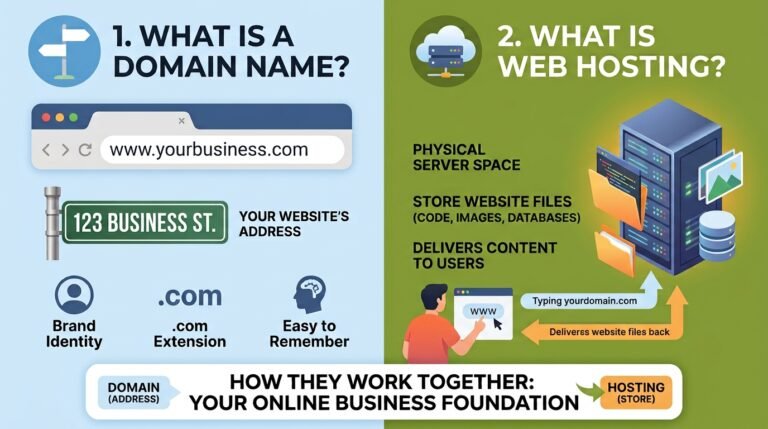
Many small business owners mix up domain registration and web hosting, thinking they are the exact same thing:
- Your domain name is the web address people type or click .
- Your web hosting is the server space where your website files, images, and database live.
Keeping your domain in your own registrar account while connecting it to reliable managed hosting gives you flexibility. You can upgrade, change, or manage your hosting environment without putting your brand address at risk.
3. Fewer Renewal Surprises and Expired Sites
Few things hurt a growing business faster than an accidentally expired domain. When a domain lapses—even briefly—your website can go offline and your custom business email addresses can stop receiving messages.
When you own the domain directly:
- Renewal reminders go straight to your inbox.
- You can enable auto-renewal and keep payment methods up to date.
- Your team always knows where the domain lives if urgent DNS changes are needed.
4. Long-Term Brand Equity Stays With You
Every business card, flyer, invoice, social profile, and local directory listing points back to your domain. As months and years pass, that address becomes tied to customer trust and search engine history.
Treating your domain as a core business asset—just like your business registration or bank account—keeps your brand portable and secure no matter how your marketing evolves.
How to Get Started the Right Way
If you are launching a new website or refreshing an existing one, keep the setup straightforward:
- Choose a clear, easy-to-spell domain that matches your business name without confusing hyphens or numbers.
- Register it under your own name or company with a reputable registrar.
- Point your DNS records to your chosen web host once your site is ready to go live.
At Studios Next, we help small businesses build clean, mobile-friendly websites, set up brand identity and business emails, and get found through local SEO—while encouraging clients to keep full ownership of their own domain names.
Would you like to publish this domain-ownership piece next, or tailor a draft around one of the other topics (such as custom business email or WordPress maintenance)?